What Is A Sensory Bin?
A sensory bin is typically a bin or container of various items that a child can touch and explore. This might include taste-safe items, toys, and even everyday household tools such as spoons, ladles, and even a spatula. You can customize each bin on a specific theme, such as a holiday or learning subject. Sensory bins are growing in popularity lately because it is convenient for parents and caregivers to put together, and it provides children with an engaging learning activity.
Froggies In The Pond Sensory Bin
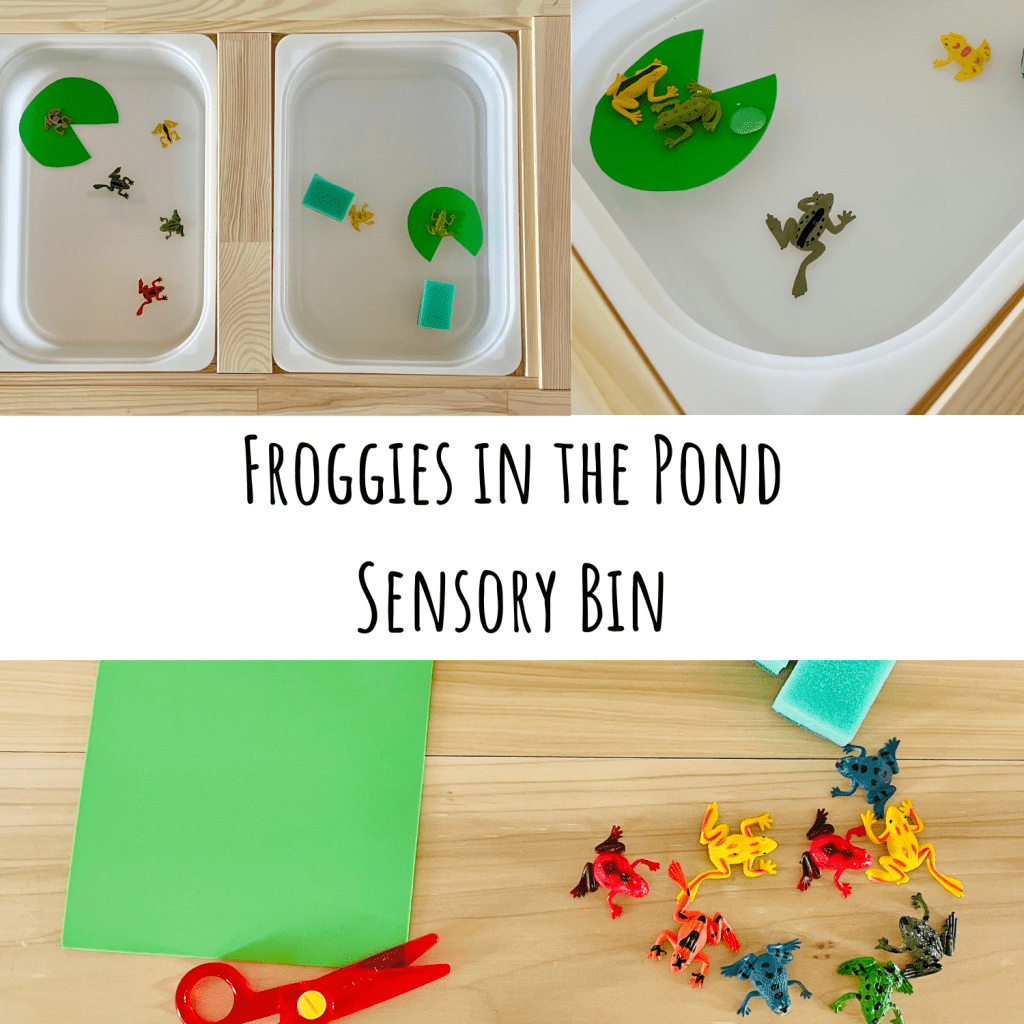
This sensory bin helps children explore the life of frogs. You might use this theme if your children are learning about Spring, Frog Life, or the Weather. During any one of these themes of the week, you are such to find a frog activity.
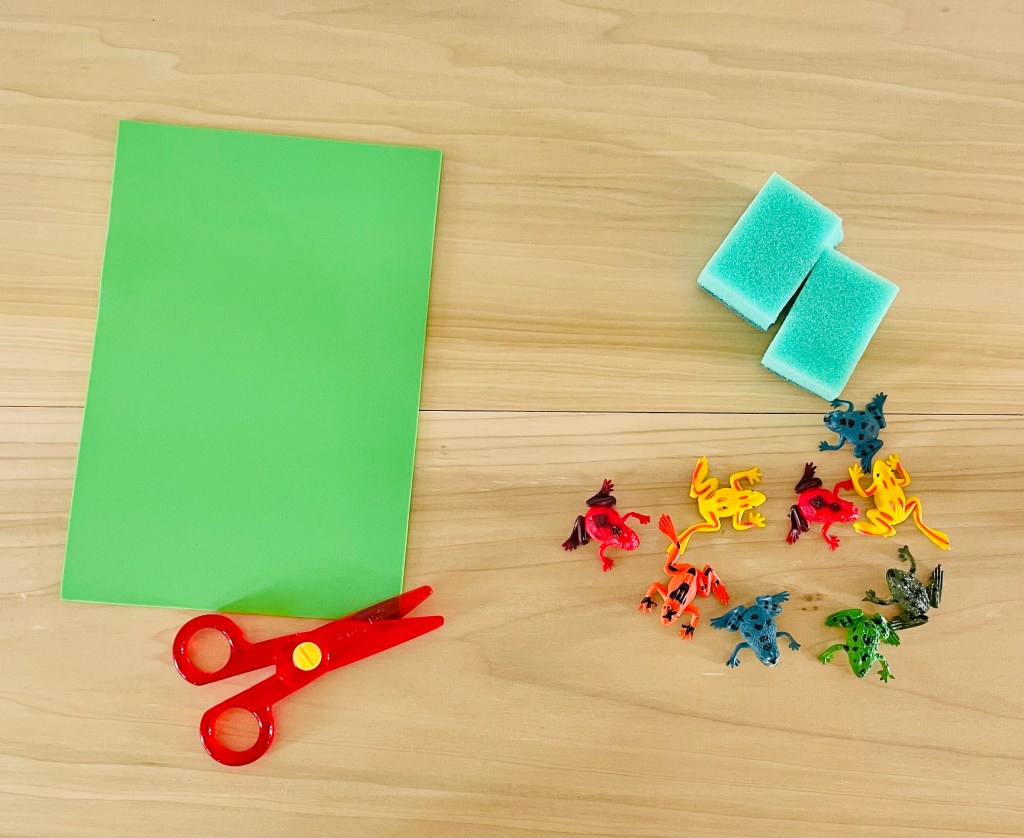
Materials:
- Green Foam Sheet
- Rubber Frogs
- Scissor
- Water
- Sponges
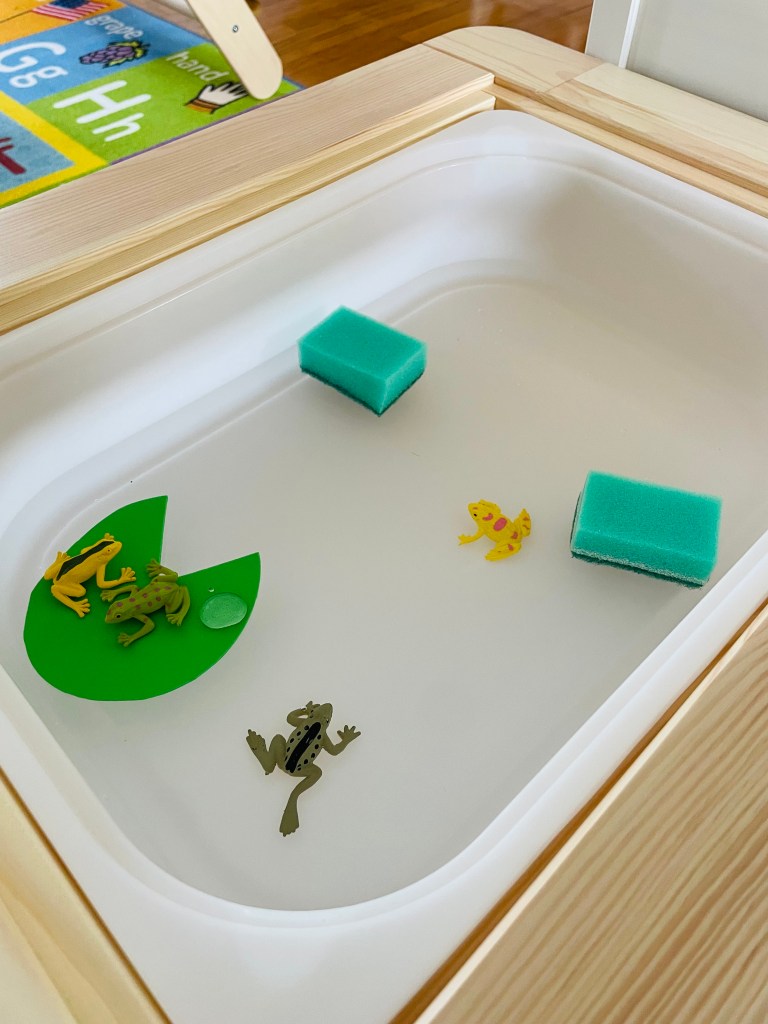
To prep the activity, you’ll need one or two bins. I like to use two and let the children add the items as they wish. Next, you’re going to fill one of the bins with water, 1/3 of the way. Take the scissors and cut the green foam sheet to look like Water Lily Pads. Using foam sheets instead of green construction paper will help give the same floating effect as real Water Lilies in the pond. I also like to take a regular sponge and cut it in half, so more children can interact with the activity. Place all of the sponges and rubber frogs in the empty bin and let the children play.
Practice fine motor skills as the children learn to absorb water onto the sponges and release it with a squeeze. Talk about the science behind buoyancy and how the green foam can float because there are air bubbles in the foam. You can also talk about why the pads don’t sink when you place a rubber frog onto the pads. The frogs as not heavy enough to make the pads sink. See if they can squeeze enough water onto the lily pads to try and make them sink.
Other Ways To Play
For more learning fun, try counting the frogs. Consider what your number of the week is and place that many frogs into the sensory bin. You can also do this with lily pads. Children can count as they place one frog per lily pad.
Give the children spoons and plastic cups. Have them practice scooping and pouring with intention. Give him simple tasks, such as pouring water onto a specific frog or scooping a certain amount of water. “Just a little” or “a lot of water.”
Finally, you can practice vocabulary and cognitive learning. Talk about the different patterns of the frogs. Practice matching the same frogs and even create simple AB patterns for the children to solve. AB patterns are very easy. Such as Blue, Red, Blue, Red, and so on. Other patterns such as ABB patterns look like this; Blue, Red, Red, Blue, Red, Red, and so on. This could be a little challenging for younger friends.
Go to my Toddlers Grow Store and check out this Toddlers Lesson Plan for yourself. It comes with easy-to-follow instructions, a materials list, and an already-to-go parent activity description. Perfect for your informal learning software.
If you liked this, head over to Toddlers Grow the Podcast for more fun educational activities and helpful tips.